
Editors are really good at looking things up, and you can be too. Here are some of my favourite editing resources. Many are free and others might be a worthwhile investment for your writing if you’re on a budget, plan to write multiple books, or want to learn editing yourself. Thorough self-editing will always make your editor’s job a bit quicker, which will save you money.
There are no affiliate links in this post; I’m just sharing resources that I use and think might be helpful to others. Updated July ’23.
Software
Microsoft Word
Microsoft Word is the professional standard in editing land. You can write your novel in something else if you prefer, and then convert it before sending it to your editor. Editors use Word because it’s easy to add comments, keep a note of adjustments with Track Changes, and all our favourite tools work with it. I use Microsoft 365 so I’m always up to date.

PerfectIt
One of the greatest tools that works from within Word is PerfectIt. It’s fantastic for checking consistency, and great for clean-up tasks like removing extra spaces or line breaks. When I edited a 180,000-word novel (!), PerfectIt picked up an inconsistency in hyphenation that I’d missed because the instances were about 48 chapters apart and both were correct! That’s worth it for me. It also integrates the Chicago Manual of Style (CMOS – see below), a very exciting development in editing land. You can find out more about the very reasonably priced PerfectIt on their website.
Grammarly
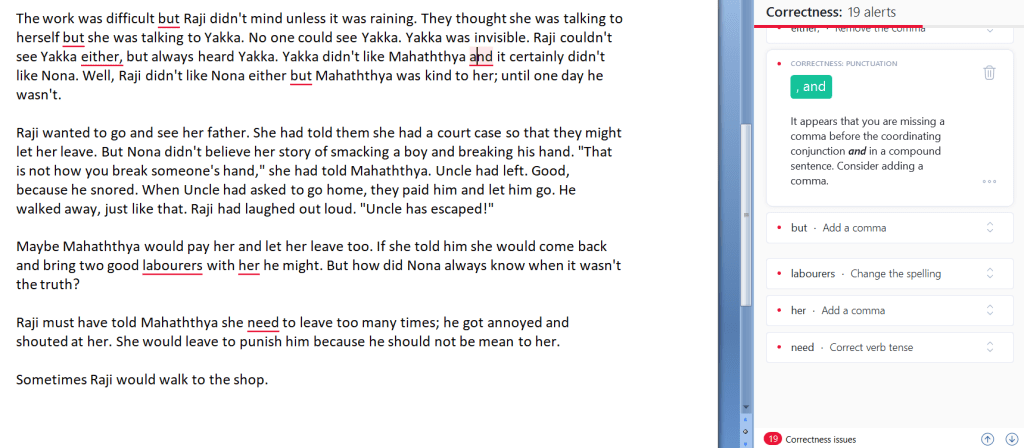
Grammarly is not perfect but it’s better than spellcheck and flags more potential issues. I also find it’s better at supporting multiple Englishes – you can switch between UK, US, Canadian, and Australian English. It works from within Word so I don’t put client work online to do any of my final checks.
Grammarly is very comma-happy, if there’s an opportunity for an optional comma, it will order you to add one! Yes, it does miss things, but it gives me extra piece of mind when I run it as a final check after I’ve finished copyediting or proofreading. I also love the tone of voice detector when I’m writing client emails. You could try the free version – just don’t click “accept all”!
Dictionaries
Merriam-Webster
Merriam-Webster is my go-to dictionary for American spelling and usage. Dictionaries are invaluable for spelling variations, capitalization, and hyphenation, and Merriam-Webster is my favourite.
Collins
I used to use Lexico for UK English, which is now dictionary.com, but I can’t recommend it because it’s full of intrusive ads. Free and pleasant to use, Collins is your best bet for British English without a paid subscription. The ads are less in your face than dictionary.com.
Oxford Dictionaries
Great for when you’re ready to up your editing game, I use this a lot. And with a subscription (not as expensive as I was expecting) you get access to UK and US dictionaries and thesauruses, Hart’s Rules, Garners Legal Usage, New Oxford Dictionary for Writers and Editors, Fowlers Modern English Usage and Grammar search.
If you plan to study for the Chartered Institute of Editing and Proofreading (CIEP) editorial test, I recommend the Oxford Dictionaries subscription as the recommended reference sources such as Hart’s are included, so you don’t need to buy the books separately if you don’t want to.
Style Guides
The Chicago Manual of Style (CMOS)
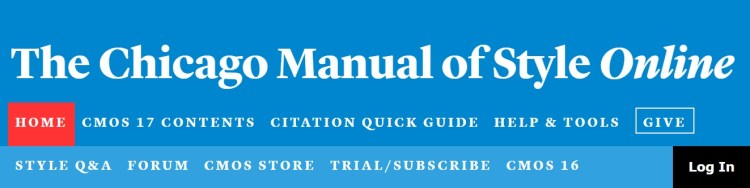
The Chicago Manual of Style Online is a great resource for style, usage, and grammar for fiction and non-fiction, and it’s not as expensive as I expected. The online version is so easy to navigate, and the search always turns up exactly what I need. There’s the Shop Talk blog and quizzes too! You could try their free trial.
New Hart’s Rules
This is a style handbook for writers and editors by Oxford University Press. Honestly, I don’t like it that much, sorry UK! But I do need it for my continued professional development with the Chartered Institute of Editing and Proofreading (CIEP) as it’s their go-to British English style guide. It’s just not as comprehensive or user-friendly as CMOS.
Online tools
Natural Reader Text to Speech
I have two free favourites for text-to-speech readers. The one in Word is OK, and Natural Reader is even better. I use the free voices in the Chrome browser extension, but there are other formats available. This saves my eyes when I’m doing a lot of research and I find it helpful when editing my own writing. It’s notoriously difficult to spot errors in your own work, here are my top proofreading tips, so any marginal gains help!
Ludwig.guru
When there’s more than one acceptable way of doing something (like zero tolerance approach and zero-tolerance approach) Ludwig is your friend. It will show you how reputable sources like The Guardian and The New York Times do things. I use the free version because I only use it occasionally, but it’s amazingly useful when I do need it!
Capitalize My Title
Here’s a bonus online tool you might not have heard of that can come in handy for capitalizing your titles and chapter headings if you use them. It handles multiple styles, including Chicago and AP (Associated Press), and it helps ensure consistency. Popular with writers of non-fiction.

Google Books Ngram Viewer
Google Ngrams are great for comparing variants that are both correct, such as spellings and hyphenation. You can filter for American English, British English, English Fiction and more. Great for inspecting trends over time. Glorious.
For example, miniscule can be considered an acceptable variant of minuscule, according to the Oxford English Dictionary. But how widely used is it? Google Ngram could help you decide which spelling to choose. (What was going on in 1996 to cause a huge dip in uses of miniscule? I want to know!)

Websites
There are too many amazing writing and editing websites to mention so I thought back to what I found most helpful when I was starting out.
The Editor’s Blog by Beth Hill. When I discovered Beth’s post on Numbers in Fiction I was sure it was the best thing ever written on the internet ever. I may have gained a little perspective since then, but not much!
The Editor’s Manual is comprehensive, easy to use, and stunning to look at. In their own words, it’s “a free resource on grammar, usage, style, and punctuation for editors, writers, and learners of the English language.” Enough said!
Conscious Style Guide is a great free online resource and I love their conscious language newsletter to keep up to date with conversations that affect inclusion, empowerment, and respect in fiction writing and beyond.

Books
Yes, books cost money but often contain so much value; maybe your library can get hold of some for you. I’ve read a lot of language guides but only a few made a lasting impression so I’m keeping my list intentionally short.
The Sense of Style: The Thinking Person’s Guide to Writing in the 21st Century by Steven Pinker. Perfect if you’re fighting to overcome a tendency toward stuffy academic writing! I expect I loved it so much due to Steven’s scientific approach.
Editing Fiction at Sentence Level by Louise Harnby. I read this as part of Louise’s course Switching to Fiction but it’s also available on Amazon. The content was exactly what I needed at the time, giving me the vocabulary to articulate issues efficiently to fiction clients. Full of illustrative examples and suggested solutions. Louise has loads of free writing and editing resources on her website.
Currently on my wish list:
Intuitive Editing: A Creative and Practical Guide to Revising Your Writing by Tiffany Yates Martin. I really identify with Tiffany’s approach to editing, only she has a few decades of publishing industry experience on me!
The Little Book of Confusables: Simple Spelling and Usage Tips to Help Smart People Avoid Stupid Mistakes by Sarah Townsend. I’ve seen the interior design and it’s gorgeous! I know Sarah’s writing is witty and entertaining, so it’ll be worth the wait to get a paper copy over to Sri Lanka. [Update: ✅ This is a handy little guide with some amusing reminders.]
Ooh, I also want the new edition of Reading the World: How I Read a Book from Every Country by Ann Morgan because it makes me want to read a myth from every country!
What are your indispensable writing or editing books and resources?


 Joanne Taylor • Ajatar Editing
Leave a reply to Joanne Taylor Cancel reply