
You don’t have to think unicorns are real to get serious about mythology and folklore research! In part 1, we explored reliable sources spanning mythology research and fantasy fiction inspiration from around the world. In this post, let’s focus on resources exploring a specific mythology in depth. This list concentrates on free online resources, but it’s worth seeing what’s available via your library too.
When inspired by things outside our lived experience, responsible writing involves thorough research. Using aspects of other cultures in our writing because they sound cool is at best hollow and at worst harmful. This post series is about appreciation, not appropriation. This means trying to understand the significance of these elements within their original context and not using them in a way that disrespects or trivializes their origins.
There are so many beautiful stories to discover, often from cultures that are very different to those we have experience of. Especially as the past is a different culture too. Advice for embracing unknowns in your reading adventures can be found in part 1. Do you have any reliable go-to resources when researching for your fiction? Let me know and I can add them to the list!
- Perseus Digital Library: Greek & Roman
- Theoi Greek Mythology
- Norse Mythology for Smart People
- The Aswang Project: Filipino folklore & mythology
- Orkneyjar: Folklore from the Orkney Islands, Scotland
- A Book of Creatures: African creatures
- Mythological Africans
- The Stories of Mahabharata: Hindu epic podcast
- Deity lists from World History Encyclopedia
- Something else?
Perseus Digital Library: Greek & Roman
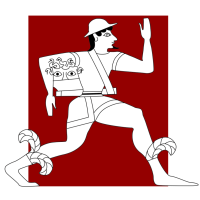
The Perseus Digital Library, hosted by Tufts University (USA), is a free-to-access digital catalogue of Greek and Roman texts, including primary and secondary sources for studying ancient Greece and Rome. There’s also a huge image collection of art and artefacts. There’s a search function, so you can look up Medusa, discover which texts she is mentioned in, and view any related images. Marvellous.
📜 Homer, Iliad book 18: Achilles hears of Patroclus’ death.
Theoi Greek Mythology
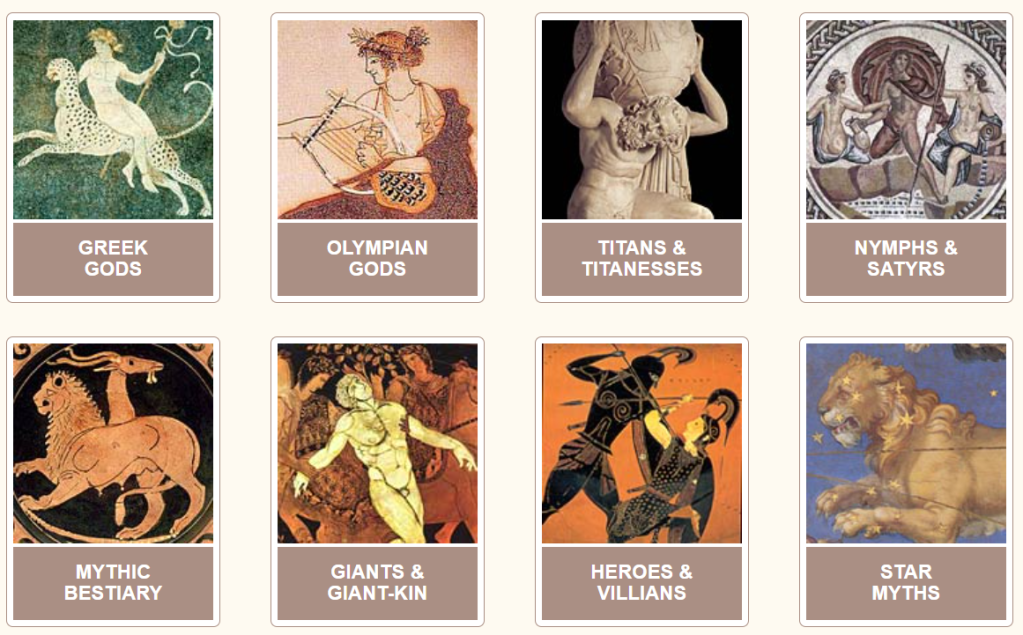
Easier to brows than the more academic Perseus Digital Library, Theoi.com has lots of images and classical texts too. And a bestiary – my favourite. There are reference guides for gods, spirits, creatures, heroes, and more. If you’re looking for inspiration, this is a great place to start because it’s so easy to browse. Designed for scholars and researchers but accessible to anyone interested in Greek mythology, regardless of prior knowledge. There is a search box; it’s hidden near the bottom of the homepage.
📜 Here’s the page for Nyx (Night) with an introductory description, family connections, encyclopedia entry, quotes from classical literature, and appearances in ancient Greek art.
Norse Mythology for Smart People
It’s not just the name that makes me feel smart visiting this website. It’s well-written, well-researched, and engaging. This site provides reliable and referenced information on Norse mythology and religion. It’s an accessible, entertaining, and scholarly introduction to the mythology and religion of the Norse and other Germanic peoples. The website covers history, literature, and culture. With gods and creatures, cosmology, tales, concepts – and even runes – it could keep you busy for hours.
📜 Here’s an introduction to the god Tyr, including a gorgeous illustration with the wolf Fenrir.
The Aswang Project: Filipino folklore & mythology
The Aswang Project is a website created to share the rich and diverse mythology and folklore of the Philippines. The term aswang encompasses various creatures, from shape-shifters to witches. This website provides information about the cultures and various mythologies of the Philippines with articles on myriad folkloric beings of the Philippine archipelago. There’s also a section on precolonial society. Posts are thorough and thoughtful, and they don’t oversimplify a complex geographical and historical area. Bakunawa is one of my favourite stories, and The Aswang Project offers a unique translation.
📜 Bakunawa and the Seven Moons with translation and annotations.
Orkneyjar: Folklore from the Orkney Islands, Scotland
The Orkney Islands, often known as Orkney, are a group of islands located off the northeast of Scotland. Orkneyjar is, in their own words, “a website dedicated to the preserving, exploring and documenting the ancient history, folklore and traditions of Orkney”. It’s nice to have such a detailed resource about only Orkney! This site offers insights into its deep history, folklore, and age-old traditions and is a comprehensive resource for exploring Orkney’s historical sites and cultural narratives.
📜 An introduction: The Folklore of the Orkney Islands. (Further navigation links are in the top right. It doesn’t look this site is updated anymore, but the content is good.)
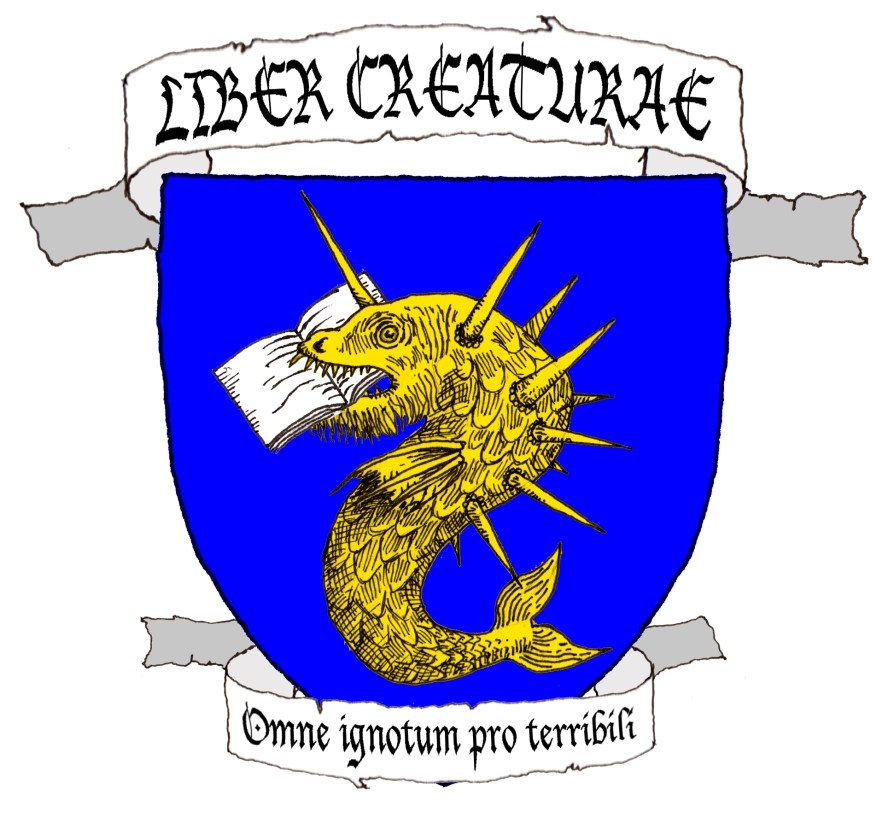
A Book of Creatures: African creatures
https://abookofcreatures.com/tag/african-folklore/
Am I breaking my own rules because this site also has creatures from other mythologies? I discovered this site while researching mythological creatures in different African traditions, so I’m calling “my blog, my rules” on this one! The hand-drawn illustrations and academic references are a perfect combination.
📜 Chipfalamfula – another of my favourite stories.
Mythological Africans

Speaking of the aquatic Chipfalamfula reminds me of author and researcher Helen Nde from Mythological Africans. (There’s a beautiful short story about Chipfalamfula in Helen’s book The Runaway Princess and Other Stories. Five stars – highly recommended!) Helen curates Mythological Africans, a website, Substack, and podcast discussing a broad range of African mythologies, spiritualities, and cultures. So you can read, watch or listen to learn more.
📜 The Research Process, a fantastic podcast episode on Substack about Helen’s thoughtful and deliberate research process. Even the show notes are a must-read!
The Stories of Mahabharata: Hindu epic podcast
Available wherever you get your podcasts.
The Stories of Mahabharata podcast series retells the ancient Indian epic Mahabharata. The podcast is written, directed, and narrated by Sudipta Bhawmik, with music and audio production by Avi Ziv. It’s an incredible piece of work, with many of the episodes working well as standalone tales. After the first few episodes, the audio quality and sound effects are crazy good. Listening to this is a family event in our house!
📜 Episode 40: Yudhistir and the Crane
Deity lists from World History Encyclopedia
World History Encyclopedia (WHE) is a non-profit educational organization with a mission to engage people with cultural heritage and improve history education worldwide. It’s the world’s most read online history resource worldwide.
When I first discovered it, I was amazed by how detailed, reliable, and readable it was. Now I volunteer as proofreader! I haven’t read all of the many, many articles and definitions, so feel free to email us if you spot any typos, and I’ll get it fixed (editor[at]worldhistory.org).
📜 Here are some comprehensive lists of deities for specific mythologies from WHE:
Egyptian Gods – The Complete List
Ancient Persian Gods, Heroes, and Creatures – The Complete List
The Mayan Pantheon: The Many Gods of the Maya
Most Popular Gods & Goddesses of Ancient China
Something else?
Looking for a mythology I haven’t mentioned? (I’ve got more favourite resources but am making myself stop!) I recommend the World Mythology and Folklore research guide at Sacramento State Library. It is fantastic.
Conclusion
From the classical realms of Greece and Rome to the deep-rooted tales of Norse gods, from eerie stories in the Philippines to narratives from around Africa – each resource we’ve delved into can be a gateway to gaining a little insight into global cultures. There’s definitely a world of stories to be explored. Let’s read adventurously! And write responsibly.
Do you find research moreish too? I’ve talked about how to stop researching for long enough to write because it’s an easy pitfall to tumble into! In fact, it’s my number one insight in the post Seven essential insights I discovered by writing three books. I’d love to hear about your own research discoveries and how they sparked your creativity. Drop your thoughts and any other gems you’ve uncovered in the comments below or let me know via email.
If you love writing historical or mythological fiction, you might like this free writing contest. Disclosure – I’m one of the organizers and am on the judging panel. Judging is blind, so don’t tell me what your short story is about!

Monsters & creatures in storytelling: from ancient mythology to modern fiction
I recently had immense fun talking about one of my favourite topics, monsters and mythological creatures, to lovely editor colleagues! This is a quick recording of the session introduction, which I made for friends who couldn’t attend. We then went on to discuss related books and films. A full blog post is in the works,…

The value of writing short stories & why not all short story contests are created equal
Writing short stories is a valuable way to improve your writing craft, experiment with different techniques, and receive feedback. It allows for quick experimentation and can help you feel like a writer. Submitting work to contests can be fun and boost confidence. Pay attention to contest guidelines and remember that reading is subjective.
Making your homepage work for you: insights from an editorial deep dive
Despite the potential impact of a great homepage on the people we want to reach, it’s easy to find ourselves thinking “But, I hate marketing.” My own recent escapades updating my website led me to analyze 28 editor websites, not to snoop on friends but to understand what makes great homepages effective. Here’s 4 things…
 Joanne Taylor • Ajatar Editing
Leave a comment